en
- de
- en
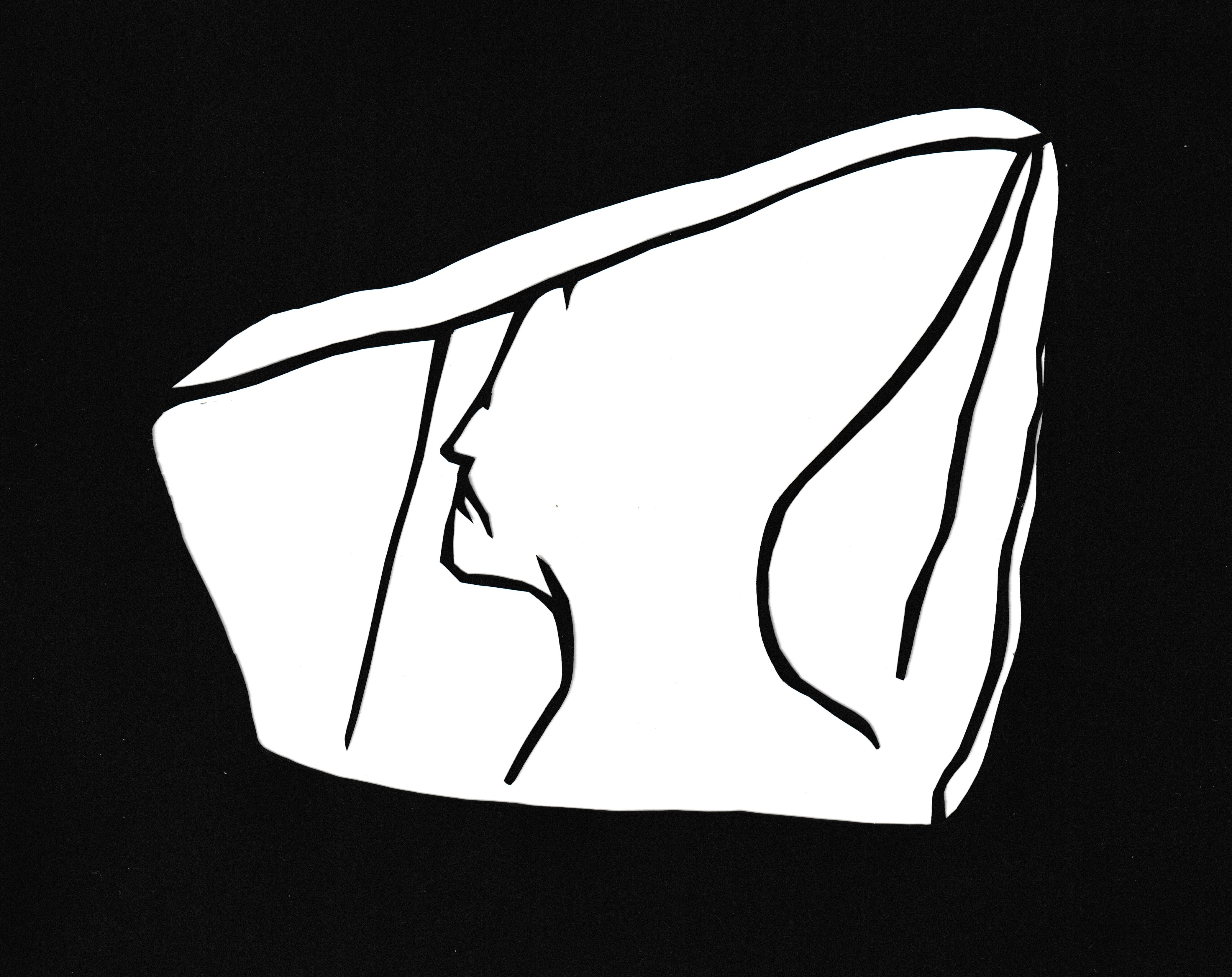
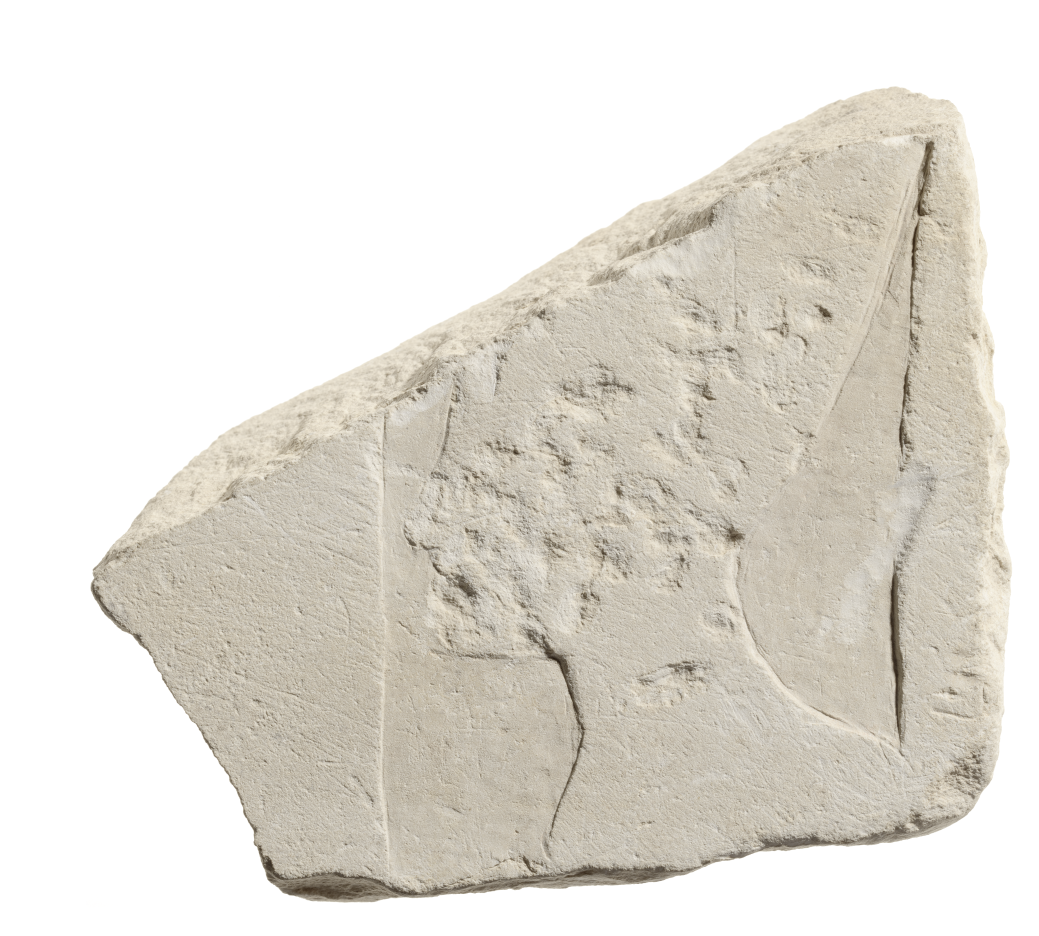
Findings
The upper left piece of this relief is obviously missing. But the profile of a head turned to the left, including headgear, is clearly visible. The slenderly shaped neck leads to a shoulder area that is not fully formed. This indicates that we are dealing with an incomplete sculptor's study. This was found during the excavations at the beginning of the 20th century in Tell el-Amarna (Egypt), during which the world-famous bust of Nefertiti was also discovered. Based on the characteristic headgear, it can be assumed that this relief also shows Queen Nefertiti.
Stars and starlets
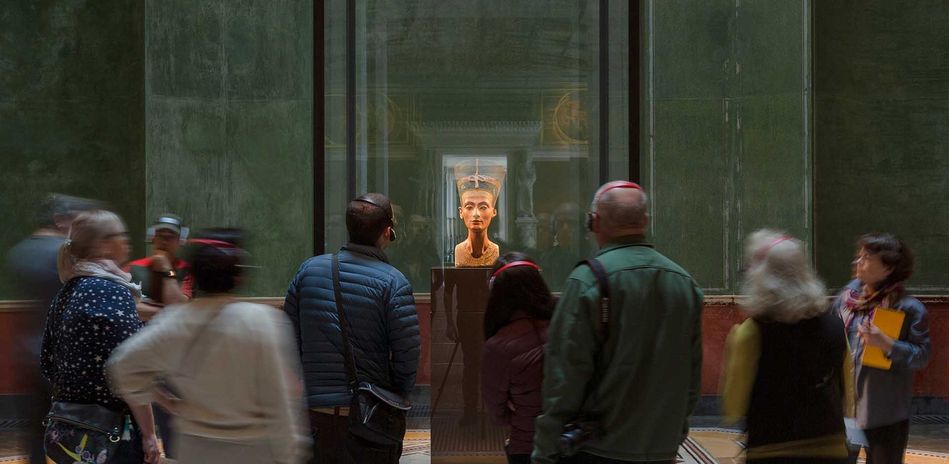
The colorful bust of Nefertiti is the star of the Neues Museum. It has been on display there in the North Dome Hall since 2009. Other excavation finds, such as the unfinished relief, are not always on display, but are stored in the depot most of the time. During the special exhibition "In the Light of Amarna" in 2012 to mark the 100th anniversary of the excavations, the extent became clearer.
Hidden
In the depot ...
is where all the objects and works that belong to a collection are stored. Some of them are kept hidden here, waiting to be discovered. In many collections there are larger collections and bequests that make creative processes and developments comprehensible. But often only selected objects are presented. In the depot, however, there are countless more.
Preliminary studies, unfinished works or damaged objects are among them. Some cannot be shown for conservation reasons, others are not of interest for exhibitions.
In some cases, it is precisely fragmentation that causes an object to remain in the depot.
As in this example
A small part of a big picture
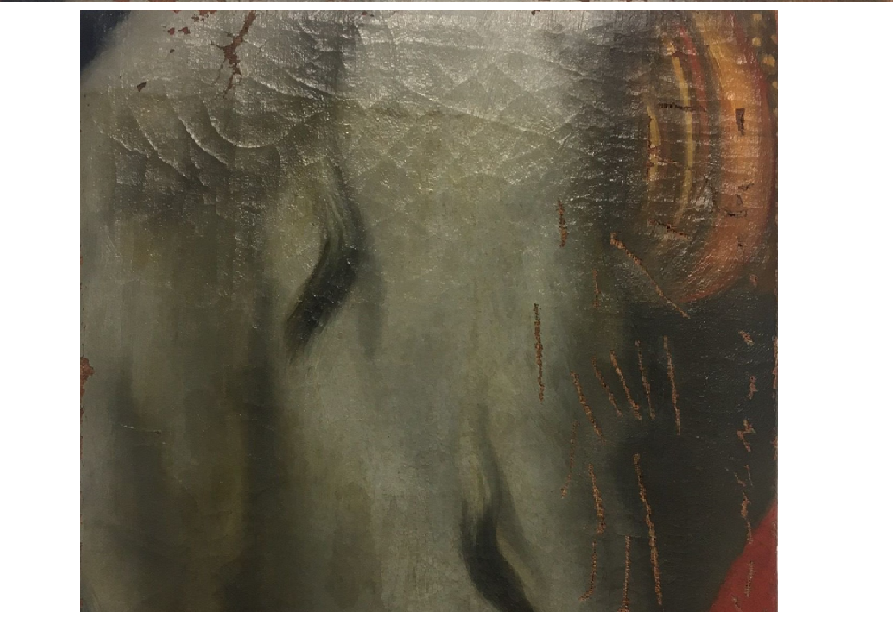
The fragment from the once larger-than-life portrait of the Polish King August III (1696-1763) by Louis de Silvestre measures only 20 by 20 centimeters.
Old photographs tell us what the painting once looked like. The small piece of canvas shows a detail of the coronation mantle with ermine fur.
An adventurous story
During the 2nd World War, the painting had already suffered some damage. Then, in 1947, it also fell victim to a theft in the so-called Italian depot, where the head and probably part of the torso were cut out of the canvas. In the course of a revision in 1960, it was finally removed from the inventory. The remainder, now preserved, was kept in storage and used for tests in the restoration workshop in 1966. In the process, it was cut again. Cut marks on the small canvas fragment also indicate that it was used for forensic experiments.
In contrast, the monumental original frame has been completely preserved.
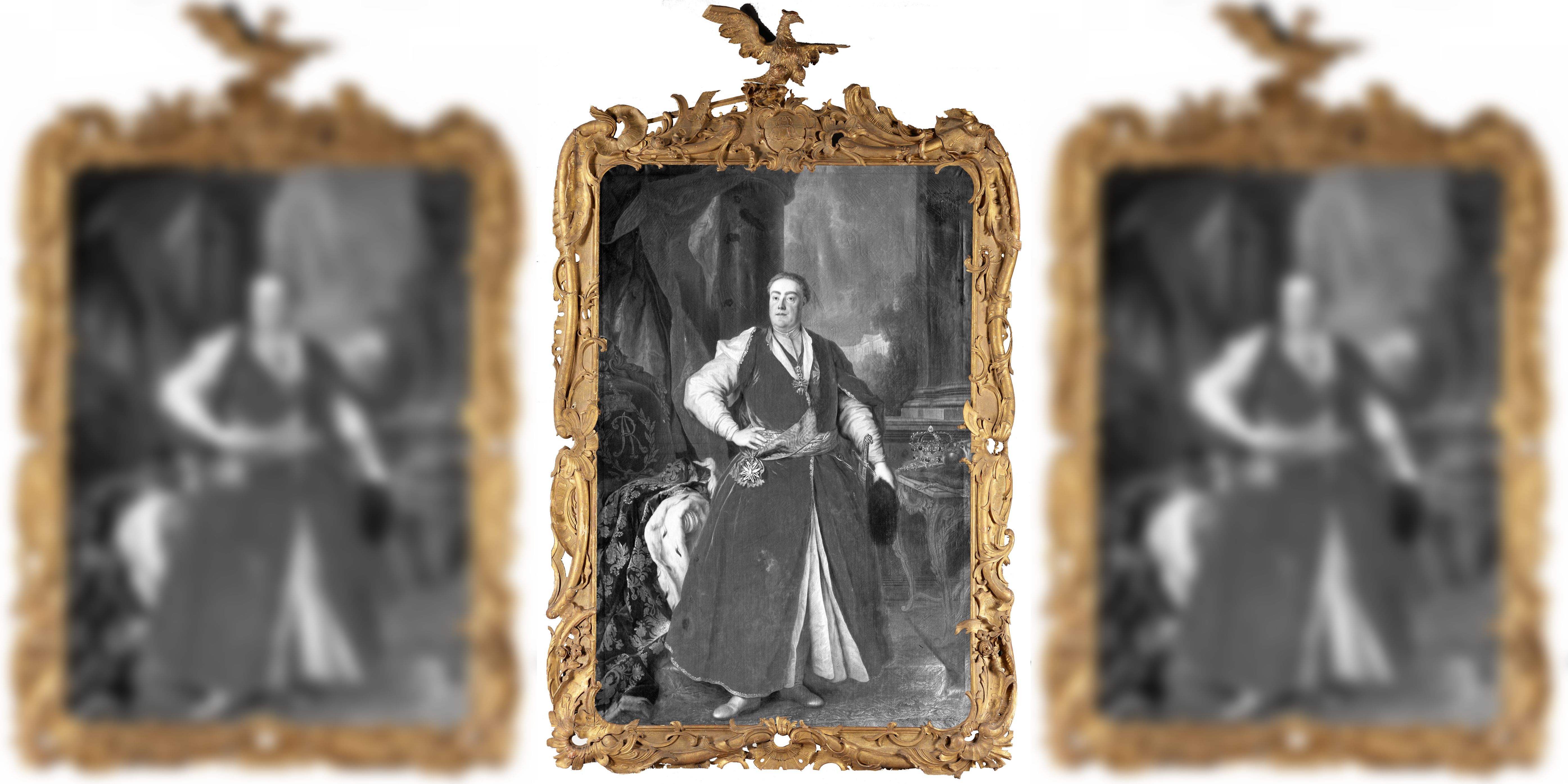
In the case of the small painting fragment it can be said quite clearly that it is an incomplete object, in others it is less clear.
When is a work finished anyway?
There are many different reasons why works remain unfinished. Sometimes, however, it is not so easy to say when something is finished at all.
Finished or unfinished - what do you think?
Back to the exhibition overview
In:complete
Fragments often seem out of place – and that is precisely what makes their stories so fascinating. The exhibition In:complete brings together works of art from different periods and asks: what actually makes an object whole?
